Find EMC Problems Before They Reach the Test Lab
EKTOS – A product can pass every functional test during development and still fail formal EMC testing. The reason is simple: functional testing confirms that a product works as intended, while EMC testing examines how it behaves in an electromagnetic environment and whether it causes unacceptable interference to other equipment.
This is where EMC precompliance testing can make a significant difference.
Precompliance testing is engineering-level testing carried out before formal compliance or certification testing. It helps identify potential problems with emissions, immunity, ESD and other EMC requirements while the design can still be changed.
Why do electronics fail EMC testing?
EMC problems are not always apparent during normal product development.
A switching regulator may generate harmonics that become visible during conducted or radiated emissions testing. An ineffective cable shield termination can allow a cable to behave like an antenna. A processor may operate reliably under normal conditions but reset during an ESD or immunity test. Firmware can also influence EMC performance by changing clock activity, processor load, communication patterns or switching states.
Formal testing can identify these issues, but finding them at that stage can mean additional engineering work, test time and cost.
Precompliance testing moves this investigation earlier in the development process, when engineers still have practical options for improving the design.
What should EMC precompliance testing investigate?
A good precompliance test should reproduce the key conditions of the intended compliance test closely enough to reveal potential weaknesses.
Depending on the product and applicable requirements, this may include conducted and radiated emissions, ESD, radiated or conducted immunity, electrical fast transients, surge susceptibility and power input behaviour. Engineers may also investigate cable positioning, enclosure effects, grounding, shielding and different firmware or operating modes.
The purpose is not simply to produce a pass or fail result. The useful result is an understanding of where a problem originates and what can be done about it.
For example, measurements can be used to compare filter designs, investigate grounding changes, assess cable configurations, evaluate shielding or determine whether a particular firmware mode is contributing to an EMC issue.
When should precompliance testing begin?
The most effective time is before design freeze, when the product is representative enough to produce meaningful results but key design decisions can still be changed.
PCB layout, grounding, filtering, connectors, cables, enclosure construction, shielding, power electronics and firmware can all affect EMC performance. Identifying a problem while these elements remain flexible gives the development team more opportunities to solve it without major redesign.
The better question before formal testing is therefore not:
“Is our product ready for the test house?”
It is:
“What evidence do we have that it is ready?”
Precompliance testing provides that evidence and allows engineers to address weaknesses before they become formal test failures.
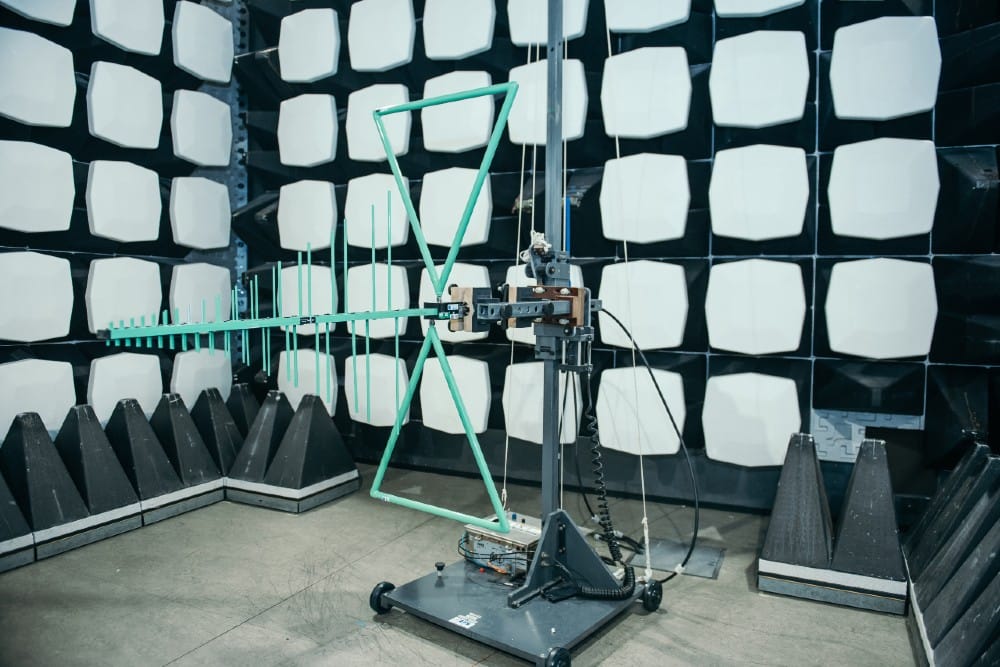
To See precompliance testing in practice you can join TRS’ Open Lab Session 2 next week. The session focuses on Pre-Compliance Testing at their laboratory in Struer on September 3, 15:00 to 17:00.
The session will give you the opportunity to see real EMC and EMI test setups, explore common failure modes and discuss how measurements can support better engineering decisions before formal certification testing.
Learn more and join the Open Lab in Struer
Quick answers
Does precompliance testing replace certification testing?
No. Precompliance testing is an engineering tool used to identify and investigate potential problems before formal compliance or certification testing. It does not replace the required formal testing.
When should EMC precompliance testing be performed?
Ideally before design freeze, when the PCB, filtering, enclosure, cabling, grounding and firmware can still be modified if problems are identified.
What can be tested during EMC precompliance?
Depending on the product and applicable requirements, testing can include conducted and radiated emissions, ESD, radiated and conducted immunity, electrical fast transients, surge susceptibility, power behaviour and different operating modes.Why can precompliance testing save development time?
It gives engineers the opportunity to identify and investigate problems before formal testing. This can reduce the risk of costly redesigns, repeated test cycles and delays later in the compliance process.

Asmildklostervej 11
8800 Viborg, Denmark
Tlf.: +45 7070 1499
E-mail: info@ektos.net